


How to Buy a Houston Duplex Without Draining Your Savings

Buying a duplex can be an opportunity to own a home while earning rental income from another unit. But if the purchase leaves you with little money for emergencies, repairs, or vacancies, even a promising property can become a financial burden.
The goal is not simply to buy a duplex. It is to find a property that fits your budget, supports your goals, and leaves you financially prepared after closing.
1. Know Your Cash to Close Before You Shop
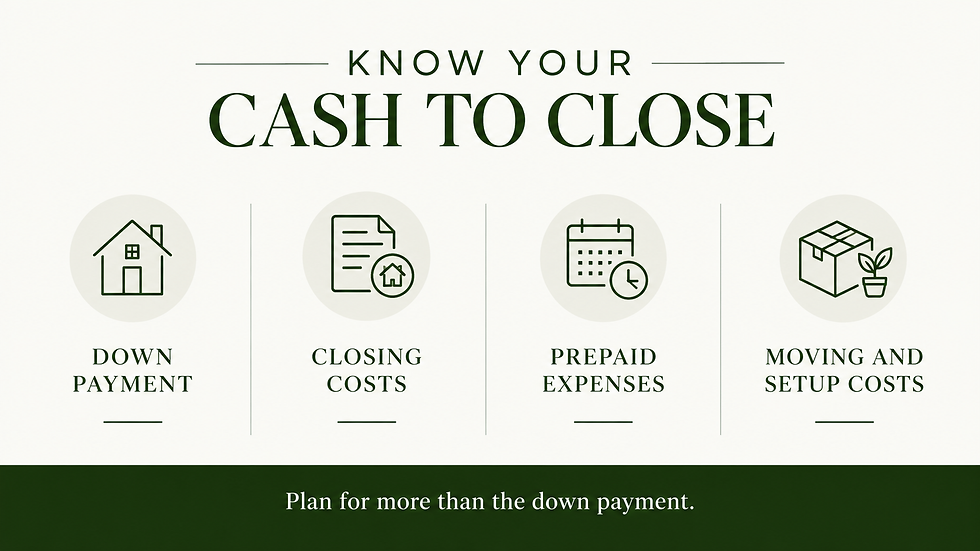
Your down payment is only one part of the money you may need to purchase a duplex. Closing costs, prepaid expenses, inspections, moving expenses, and other upfront costs can add up.
Before touring properties, speak with a lender about your financing options, estimated cash to close, and loan requirements. Ask whether you may qualify for any eligible assistance programs or what seller-paid closing costs could be available through negotiation.
Seller credits and lender credits can help offset certain eligible costs, but they come with program and transaction rules. They are not guaranteed, and they should not be treated as unrestricted cash back.
A clear estimate of your upfront expenses helps you set a realistic price range before falling in love with a property.
2. Evaluate the Rent From the Second Unit
One of the biggest attractions of a duplex is the possibility of rental income. If you plan to live in one unit and rent out the other, that income may help offset your housing expenses.
But do not build your budget around the assumption that the unit will always be occupied or that the highest advertised rent is achievable.
Research comparable rentals in the specific Houston-area neighborhood. Consider the unit's condition, layout, location, and features when estimating realistic rent. Also, ask your lender how projected rental income may be evaluated for your loan. Not all expected rent necessarily counts toward mortgage qualification.
Most importantly, compare the potential rent with the property's full expenses, not just the mortgage payment.
3. Calculate the Real Cost of Ownership
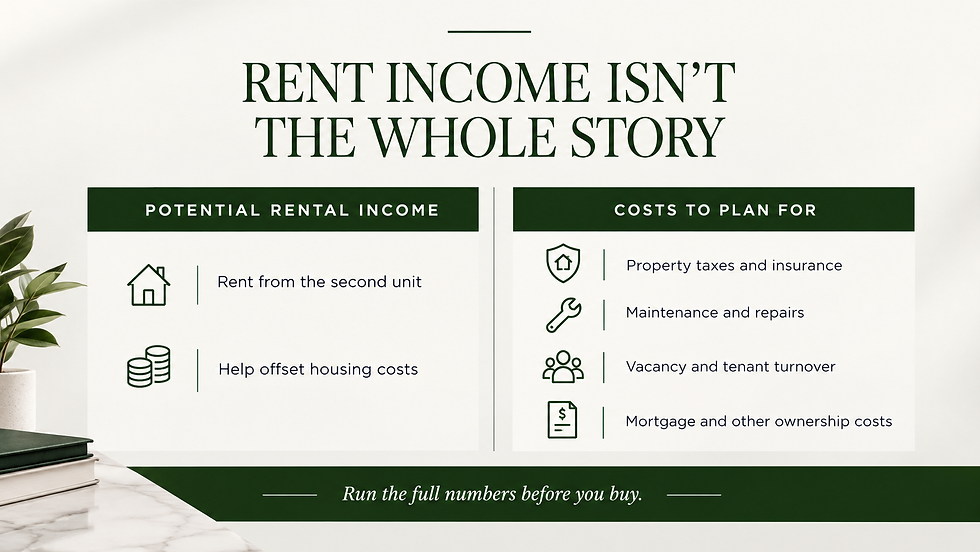
A duplex's monthly expenses can extend well beyond principal and interest. Your analysis should account for property taxes, insurance, mortgage insurance if applicable, HOA dues, utilities you are responsible for, routine maintenance, and larger repairs.
You should also plan for vacancy periods, tenant turnover, and unexpected expenses. Rental income can change, but your mortgage and many ownership costs continue.
Estimate the rent conservatively, subtract realistic operating expenses, and calculate how much of your own income you may need to contribute each month. This gives you a clearer picture of whether the property supports your financial goals.
4. Protect Your Savings After Closing
Using every available dollar to purchase a property can leave you vulnerable when something needs repair or a tenant moves out.
Decide how much money you want to keep available after closing for personal emergencies and property expenses. Your reserve target should reflect your income stability, the property's condition, and the risks you can comfortably manage.
A lower purchase price does not automatically make a duplex a better investment. The condition of the property, realistic rental demand, financing terms, and ongoing costs all matter.
5. Build Your Strategy Before Making an Offer
You do not have to figure out every number alone. A thoughtful buying strategy brings together your budget, financing, rental estimates, negotiation opportunities, and long-term plans.
Before making an offer, review the full numbers and decide whether the property makes sense. Sometimes the right move is to negotiate. Sometimes it is to keep looking.

Want to explore whether a Houston-area duplex fits your goals? DM PLAN and my team will call you to discuss your next step.



Comments